
The Sound That Hits Different
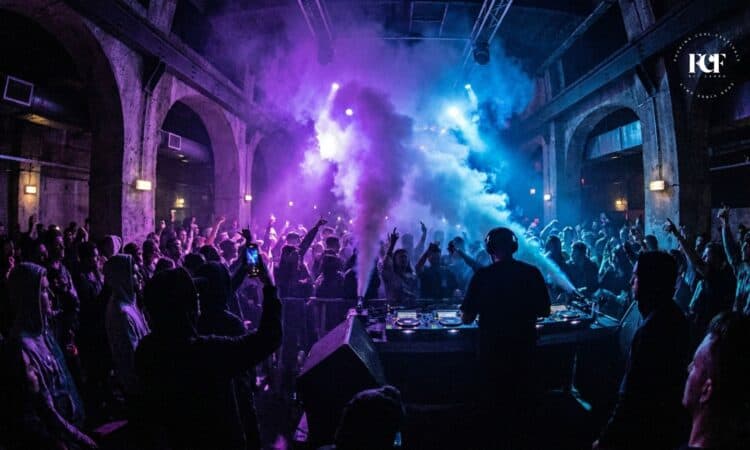
You know that feeling. You’re deep in a set, the bassline is rolling, and then — out of nowhere — a melody cuts through the darkness. Something that sounds almost like sadness, almost like joy, almost like both at once. The crowd doesn’t just move. They feel. That’s melodic techno. That’s the sound we’re here to break down.
Melodic techno is one of the most emotionally charged subgenres in electronic music. It sits at the intersection of techno’s relentless drive and melodic house’s harmonic depth — and for Sri Lanka’s underground community, it’s become the defining sound of the scene. From Park Street Warehouse to the rooftops of Colombo, if you’ve been at a proper event lately, you’ve danced to melodic techno whether you knew the name or not.
This guide is for the curious. The newcomer who wants to understand what they’re hearing. The regular who wants the vocabulary. The selector who wants the full picture. We’re going deep.
What Is Melodic Techno?
Melodic techno — sometimes called melodic techno/house or melodic deep techno — is a subgenre of electronic dance music that blends the structural elements of techno with rich, emotionally resonant melodies, harmonics, and progressive song-building.
Where classic techno is often described as industrial, mechanical, even confrontational, melodic techno adds a human emotional core. Think of it like this:
- Classic Techno = the machine
- Melodic Techno = the machine with a soul
The BPM range typically sits between 120–135 BPM — slightly slower than peak-time techno — which gives the music room to breathe and allows melodies to develop over time. The tracks are long, often 7–10 minutes, and are built for peak-hour dancefloors where DJs have the freedom to take the crowd on a journey.
DEFINING CHARACTERISTIC Melodic techno lives in the tension between groove and emotion. The kick drives your body; the melody moves something else entirely.

Where Did It Come From? The Origins of Melodic Techno
The Seeds: Detroit + Berlin (1980s–2000s)
To understand melodic techno, you need to understand its parents: Detroit techno and Berlin techno. Detroit gave the world the blueprint — a futuristic, synth-driven music born from the post-industrial decay of Motor City in the mid-1980s. Artists like Juan Atkins, Derrick May, and Kevin Saunderson (the Belleville Three) fused Kraftwerk’s electronic minimalism with funk and soul to create something entirely new.
Derrick May famously described techno as sounding like ‘George Clinton and Kraftwerk stuck in an elevator.’ That DNA — machine + emotion — is still audible in every melodic techno track made today.
Berlin took that blueprint and hardened it. Throughout the 1990s and 2000s, clubs like Tresor and Berghain developed a darker, more hypnotic style. The BPMs went up, the melodies stripped back. But something was building in the underground that would swing the pendulum back toward melody.
The Breakthrough: Afterlife and the New Wave (2010s)
The moment melodic techno crystallized as a defined sound is widely attributed to the emergence of Tale Of Us — the Italian duo of Carmine Conte and Matteo Milleri — and their label Afterlife, founded in 2016.
Afterlife became the genre’s spiritual home. The label’s visual identity, resident artists, and sound curation gave melodic techno a scene, an aesthetic, and an audience. Artists like Agents Of Time, Innellea, and Massano found their home here. The Afterlife label parties, first in Berlin and then worldwide, became pilgrimages for a generation of electronic music fans.
Simultaneously, artists like Stephan Bodzin (Germany), Recondite (Germany), and Adam Beyer with Layton Giordani were pushing the boundaries of what techno could feel like. The Drumcode label, traditionally a harder techno platform, even began releasing more melodic-leaning work.
The Global Explosion (2019–Present)
Melodic techno’s global reach accelerated dramatically after 2019, supercharged by the pandemic era’s explosion of livestream culture. Artists like Anyma (the solo project of Matteo Milleri), Massano, ARTBAT, and Afterlife’s various residents reached massive global audiences through YouTube DJ sets and streaming platforms.
Anyma’s 2022 live show at the ancient Roman theatre of Orange (France), streamed to millions, is often cited as a cultural moment that announced melodic techno’s arrival as a mainstream-adjacent but underground-credentialed genre.
As of 2024, melodic techno is arguably the most globally consumed subgenre of underground electronic music — while still maintaining significant depth and artistry beneath its accessible surface.

Anatomy of a Melodic Techno Track
What actually makes a track ‘melodic techno’? Here’s the breakdown of the core sonic elements:
1. The Kick Drum
The kick in melodic techno is deep, punchy, and often side-chained to create that signature ‘pumping’ effect where the rest of the mix ducks in volume every time it hits. It’s not as hard-hitting or distorted as peak-time techno — it has weight without aggression. Think of it as the heartbeat of the track.
2. The Bassline
Often synthesized rather than sampled, the bassline in melodic techno is melodic in itself. It frequently plays a motif or a note pattern that complements the lead melody, creating a sense of harmonic depth even in the low end. Artists like Stephan Bodzin are masters of basslines that practically sing.
3. Atmospheric Pads
Layered synthesizer pads — long, evolving chord clusters — form the harmonic foundation of most melodic techno tracks. These are often built from analog or virtual-analog synthesizers (Moog, Prophet, Roland Juno) or software equivalents. They create the ‘cloud’ that the melody floats through. Many tracks build entire emotional arcs purely from pad evolution.
4. The Lead Melody
This is the defining feature. A melodic techno track usually has a lead melody that is memorable, emotional, and often bittersweet. Minor keys dominate — there’s something inherently melancholic about the genre. The melody might be played on a synthesizer, a piano sound, an arpeggiator, or even a processed vocal fragment. It appears, develops, disappears into breakdown, and returns in euphoric climaxes.
5. Percussive Layers
Beyond the kick, melodic techno features hi-hats (often with swing), claps, snares, and complex percussion sequences. These are typically less aggressive than hard techno — they serve the groove without dominating the emotional space. Shakers, rimshots, and organic-sounding elements are common.
6. The Breakdown and Build
This is where melodic techno is a masterclass in tension. A classic melodic techno track will strip everything back — kick disappears, percussion fades, leaving only the pads and melody floating in reverb-drenched space. The crowd holds its breath. Then the elements re-enter, layer by layer, until the full drop releases the tension into a euphoric peak. When done right, it’s one of the most emotionally powerful moments in club music.
PRODUCER TIP The breakdown is everything. If your breakdown doesn’t create genuine tension, your drop doesn’t earn its release.
7. Sound Design
Melodic techno is heavy on sound design. Producers spend enormous amounts of time crafting the timbre of each element — the wobble of a pad, the way a melody note decays, the texture of a bass. Field recordings, processed organic sounds (rain, wind, voices) are often layered in to give the music a sense of place and memory. This attention to sonic texture is part of why the genre feels so immersive.

Essential Artists in Melodic Techno
The Architects
Tale Of Us
The Italian duo who essentially defined modern melodic techno. Their label Afterlife is the genre’s epicentre. Tracks like ‘Endless’ and ‘Mirko’ are stone-cold classics. Their DJ sets are legendary — long, slow-building, devastatingly emotional.
Stephan Bodzin
The German producer and live act is a master of long-form melodic techno built almost entirely from analog synthesizers. His live sets — featuring Moog synthesizers played in real time — are among the most technically impressive in electronic music. ‘Powers of Ten’ and ‘Strand’ are essential listening.
Boris Brejcha
Often credited as a pioneer of ‘high-tech minimal’ — a style closely related to melodic techno. His signature masked-performer aesthetic and intricately detailed productions helped lay the groundwork for the genre’s current form.
The Afterlife Generation
Anyma (Matteo Milleri)
The solo project of one half of Tale Of Us has become perhaps the biggest name in melodic techno globally. Anyma’s live shows incorporate visual art and technology at a cinematic level. His 2023 New Year’s Eve show at the Sphere in Las Vegas was a watershed moment for the genre’s cultural reach.
Massano
Italian producer whose intricate, melody-forward productions have made him one of Afterlife’s most distinctive voices. Tracks like ‘Oblivion’ demonstrate his ability to create gut-punch emotional moments in a club context.
ARTBAT
The Ukrainian duo — Artur Shakhov and Batishchev — bring a rawer, more driving energy to melodic techno. Their b2b sets with Tale Of Us are landmark moments in the genre. They represent the bridge between melodic and more traditional techno.
Agents Of Time
Another Afterlife cornerstone, known for deeply layered, cinematic productions that take their time developing. Their track ‘The Protagonist’ is considered a genre touchstone.
Crossover Artists
Adriatique
Swiss duo who move fluidly between deep house and melodic techno. Their Siamese label and parties represent a more organic, earthy take on the sound.
Maceo Plex
American-Cuban producer whose Ellum label and bold aesthetic bridged the gap between the underground and a more accessible electronic music audience. His track ‘Solar Detroit’ is iconic.
Recondite
German producer whose misty, atmospheric productions sit in a more ambient register of melodic techno. Essential for understanding the genre’s quieter, more introspective dimensions.

Essential Labels to Know
Afterlife
Founded by Tale Of Us in 2016. THE defining melodic techno label. Their releases set the standard for sound and visual identity. Every Afterlife release is an event. Check their SoundCloud for free-to-listen archives.
Innervisions
Berlin-based label founded by Dixon, associated with a deeper, more sophisticated branch of melodic house and techno. Artists like Âme, Henrik Schwarz, and Stimming represent its sound.
Kompakt
Cologne institution that spans minimal, techno, and pop-ambient. Stephan Bodzin’s home, and one of the most historically significant labels in European electronic music.
Drumcode
Adam Beyer’s Swedish techno label, primarily peak-time techno, but increasingly incorporating melodic elements. Represents the ‘harder edge’ of the melodic techno world.
Watergate Records
Berlin club Watergate’s label arm — associated with a deeper, more groove-driven strain of melodic house and techno. Adriatique and other European talent.
Ellum Audio
Maceo Plex’s label — mid-tempo, tech-house-adjacent melodic electronic music. Excellent gateway label for people entering the space from a house background.
Mango Alley (Sri Lanka)
Colombo’s own — a local label and collective pushing melodic and progressive sounds from Sri Lankan producers. Representing the next generation of local talent in a genre that has found a deeply receptive home in our island’s underground scene.
Melodic Techno vs. Everything Else
The genre landscape can be confusing. Here’s how melodic techno sits relative to its neighbours:
Melodic Techno vs. Classic Techno
Classic (or ‘peak-time’) techno is harder, faster (135–150 BPM), more industrial, and less melodically focused. The experience is physical and hypnotic. Melodic techno is slower, more emotional, and builds complex harmonic structures. Both can be dancefloor music, but they aim for different parts of the body and mind.
Melodic Techno vs. Melodic House
Melodic house is slower (120–126 BPM typically), warmer, more rooted in house music’s four-on-the-floor groove and chord progressions. Melodic techno is colder, more minimal in its percussion, and often more atmospheric. The line between them is genuinely blurry — many DJ sets and tracks live in both worlds simultaneously. Solomun, for example, is frequently labelled both.
Melodic Techno vs. Progressive House
Progressive house (think early Deadmau5, Eric Prydz, Sasha) builds tracks in long, evolving structures but comes from a brighter, more uplifting tonal palette. Melodic techno shares the long-form structure but is generally darker in mood, less synth-pop influenced, and more rooted in the minimal/techno tradition.
Melodic Techno vs. Afro House
Afro house is rhythmically driven, warm, and tribal in its percussion, drawing from African musical traditions. Melodic techno shares the atmospheric quality but is structurally quite different. Many DJs (Black Coffee, for example) bridge both worlds successfully.
RULE OF THUMB If it has a driving kick, emotional synth melodies, 120–135 BPM, and feels both cerebral and euphoric — it’s in melodic techno territory.

How Melodic Techno Works on the Dancefloor
Understanding what melodic techno does to a crowd is key to understanding why it’s taken over the underground. Unlike peak-time techno, which hits hard and fast from the jump, melodic techno is a long game.
The Opening Hours
Melodic techno DJs typically begin in deeper, more minimal territory. The crowd is still arriving. The sets are hypnotic, almost meditational — laying a foundation of groove before the emotional elements arrive.
The Build
As the night develops, the melodies intensify. Tracks become more layered. The harmonics grow richer. The crowd, now in a state of deep groove, becomes increasingly receptive to the emotional payloads the music is delivering.
The Peak
The peak-hour melodic techno moment — when the perfect track drops its melody over a euphoric kick — is genuinely one of the most powerful experiences in contemporary club culture. It creates simultaneous individual and collective emotional release. People close their eyes. They raise their hands. They feel something that’s difficult to put into words.
The Comedown
A skilled melodic techno DJ doesn’t end on a high — they bring the crowd down gently, transitioning back through deeper, more meditative territory. This emotional arc is part of what makes a great melodic techno DJ set feel like a complete artistic experience rather than just a collection of tracks.
WHY IT MATTERS The best melodic techno DJ sets feel like films. There’s a beginning, middle, climax, and resolution. When it’s done right, you leave feeling changed.
Melodic Techno in Sri Lanka
The Sri Lankan underground scene has embraced melodic techno with remarkable depth and passion. Colombo’s intimate venue circuit — Park Street Warehouse, The Marquee, The Rabbit Hole, Men’s Gallery — provides exactly the right physical environment for melodic techno: dark, immersive spaces where sound systems can do their work.
Why It Resonates Here
There’s something about melodic techno’s emotional register that resonates deeply with Sri Lankan audiences. The genre’s blend of melancholy and euphoria, its sense of collective experience, its ability to create profound moments in dark rooms — these qualities translate powerfully in Colombo’s tight-knit underground community.
The Local Artists
Sri Lankan producers and DJs are increasingly working in the melodic techno space. Artists like Noiyse Project have built international profiles playing in this world. The Colombo underground is producing selectors who understand the grammar of the genre — the long-form build, the emotional arc, the importance of track selection and sequencing.
The Labels
Local labels like Till The Sunrise, The Soundgarden, Flying Dust Records, and Mango Alley are creating infrastructure for local melodic and progressive electronic music. These labels are crucial — they provide platforms for local releases, create communities around specific sounds, and connect Sri Lankan artists to the global underground.
The Events
Organizers like La Foresta, The Spirit Events, Concept Collective, Generic Beats, and Synthesis are bringing international melodic techno talent to Sri Lanka and building events that rival what you’d find in European underground scenes. These nights are changing what Sri Lankan audiences expect from a club experience.

Your Essential Melodic Techno Listening Guide
Start Here: The Entry Points
- Tale Of Us — Fabric 91 (mix) — A masterclass in long-form melodic storytelling
- Anyma — Geist (live set, YouTube) — The definitive statement of melodic techno in 2023
- ARTBAT — Best Of 2023 (mix) — Driving, emotional, perfect introduction
- Stephan Bodzin — Powers Of Ten (album) — The genre’s Sgt. Pepper
- Massano — Afterlife Ibiza (mix) — Peak-hour melodic techno from a master
Go Deeper: Essential Tracks
- Tale Of Us — ‘Endless’
- Anyma & Chris Avantgarde — ‘Eternity’
- Agents Of Time — ‘The Protagonist’
- ARTBAT — ‘Upperground’
- Stephan Bodzin — ‘Strand (Maceo Plex Remix)’
- Massano — ‘Oblivion’
- Recondite — ‘Hüls’
- Innellea — ‘Human Paradox’
Platforms to Follow
- Afterlife YouTube channel — official label sets and releases
- Balance Music (YouTube/SoundCloud) — curated melodic techno/house mixes
- DJ Mag — covers the genre extensively
- Resident Advisor — reviews, mixes, and editorial
- SoundCloud — still the best platform for discovering underground releases
Making Melodic Techno: A Production Overview
For the producers in the room — here’s a high-level overview of how melodic techno gets made.
DAW & Tools
Most professional melodic techno production happens in Ableton Live or Logic Pro X. The genre is heavily reliant on synthesis — both hardware and software. Key synthesizers include Moog Sub 37, Roland Juno, Sequential Prophet, and software equivalents like Arturia’s V Collection, Native Instruments Massive, and Xfer Serum.
Tempo and Structure
Set your tempo between 122–132 BPM. Structure your track over 7–10 minutes minimum. Don’t rush. Melodic techno rewards patience — both in production and on the dancefloor. Your intro should be 2+ minutes. Your breakdown should feel genuinely long. Your outro should let DJs mix smoothly.
The Melody
Work in minor keys or modes that carry natural tension (Dorian, Phrygian). Your lead melody should be memorable but not pop-obvious. It should reward repeated listening. Use portamento (pitch glide between notes) on your synths — it creates the emotional slide that’s characteristic of the genre.
Mixdown and Mastering
Melodic techno mastered for clubs needs a strong sub-bass presence, controlled mid-range (avoid muddiness — it destroys the atmospheric quality of pads), and careful high-end treatment of the melodic elements. Reference your mix at low volumes. If the emotion still comes through quietly, it’ll hit hard loud.
PRODUCTION RESOURCE Noiyse Project’s SoundCloud is a case study in Sri Lankan melodic production. Study the structure, the sound selection, the emotional arc.
Why Melodic Techno Matters
In a world of algorithm-optimised playlists and 3-minute attention spans, melodic techno is an act of resistance. It demands patience. It rewards presence. It asks you to let go of where you came from and trust that the DJ knows where you’re going.
For Sri Lanka’s underground community, it’s become more than a genre — it’s a gathering ritual. The nights where Colombo’s selectors play melodic techno sets are the nights people talk about for weeks. They’re the nights where the music becomes the point, not the backdrop.
Understanding melodic techno means understanding that electronic music can be profound. That four-on-the-floor doesn’t have to be empty. That a synthesiser can make you cry on a dancefloor at 2AM — and that’s not a bug. That’s the whole point.
The scene in Sri Lanka is young but it’s serious. The artists are developing. The audiences are educated and hungry. The infrastructure is building. Melodic techno isn’t arriving here — it’s already home.